The Colors of Magic - Available Now

Showing posts with label Flaws. Show all posts

February 4, 2016

Alignment in Dungeons and Dragons

Old and messy as it is, the D&D alignment system can still be an excellent tool for roleplaying.  I love that the 5th edition D&D Personality Traits, Ideals, Bonds and Flaws are subtly connected to character alignment.  Even in 2nd, 3rd, 4th edition and Pathfinder, you can still get a lot of profit out of alignment as a DM and as a player.

First, for alignment to have value, it has to mean something.  Here's the very basic point you should understand about alignment:  The alignment that lets you do the expedient, convenient, logical, tactical, strategic, reasonable thing is True Neutral.  The other four options (Lawful, Chaotic, Good, and Evil) occasionally require you to make sub-optimal or unreasonable choices in character.  In effect, those four alignment choices are "flaws," in the RPG sense of the word.  They're voluntary restrictions on your behavior.

Flaws in RPGs

A "flaw" is a common roleplaying game mechanic that gives you some game system reason to have your character make a decision that is different from and worse than the decision that you, the player, would make.

In a roleplaying game, players take on the role of people different from themselves, but RPGs are usually about problem solving.  Consequently, players spend a lot of time working out the most sensible solutions to problems.  But if you spend all your time having your character, Jordak, making the decision you, Joe, would make, what makes Jordak different from Joe?  Jordak is just Joe with a magic dagger and 45% Find and Remove Traps.  The character of Joe is the same as the character of Jordak.

So I've come up with a way to explain Alignment that Dungeon Masters and players can use to best understand it.

It's a really simple distinction; there are only two kinds of alignment:  There's Neutral, and there's everything else.

Neutral
You act lawful/chaotic or good/evil when it makes the most sense for you.  You don't make a point of honor.  You don't make a point of defying authority.  You don't make a point of altruism.  You don't make a point of selfish greed.  If it's foolish to stick to strict rules, you break them.  When it's comfortable to let someone else continue to suffer while you drink fine wine, you drink fine wine.  When defying authority would cost you, you go along to get along.  When helping others improves your own life, you give freely.  Just because the players of Neutral characters have no limitations on the choices they make doesn't mean they should just play their character as an avatar of themselves.

Chaotic/Lawful/Good/Evil
You choose to act in a particular way, when an average person would not.  Chaotic characters choose to defy authority, even if it costs them.  Because they flout honor, they have flexibility.  Lawful characters choose to obey an honor code, even when it costs them.  Because they uphold a code of honor, they have trustworthiness.  Evil characters choose to satisfy their urges at the expense of others, even if it destroys their community.  Because they never spend a thought for others, they have to rely on their own strength and dominate those around them.    Good characters choose to sacrifice their own needs for the needs of others, which often hurts them to no profit in the mortal world (but that's the point, of course).
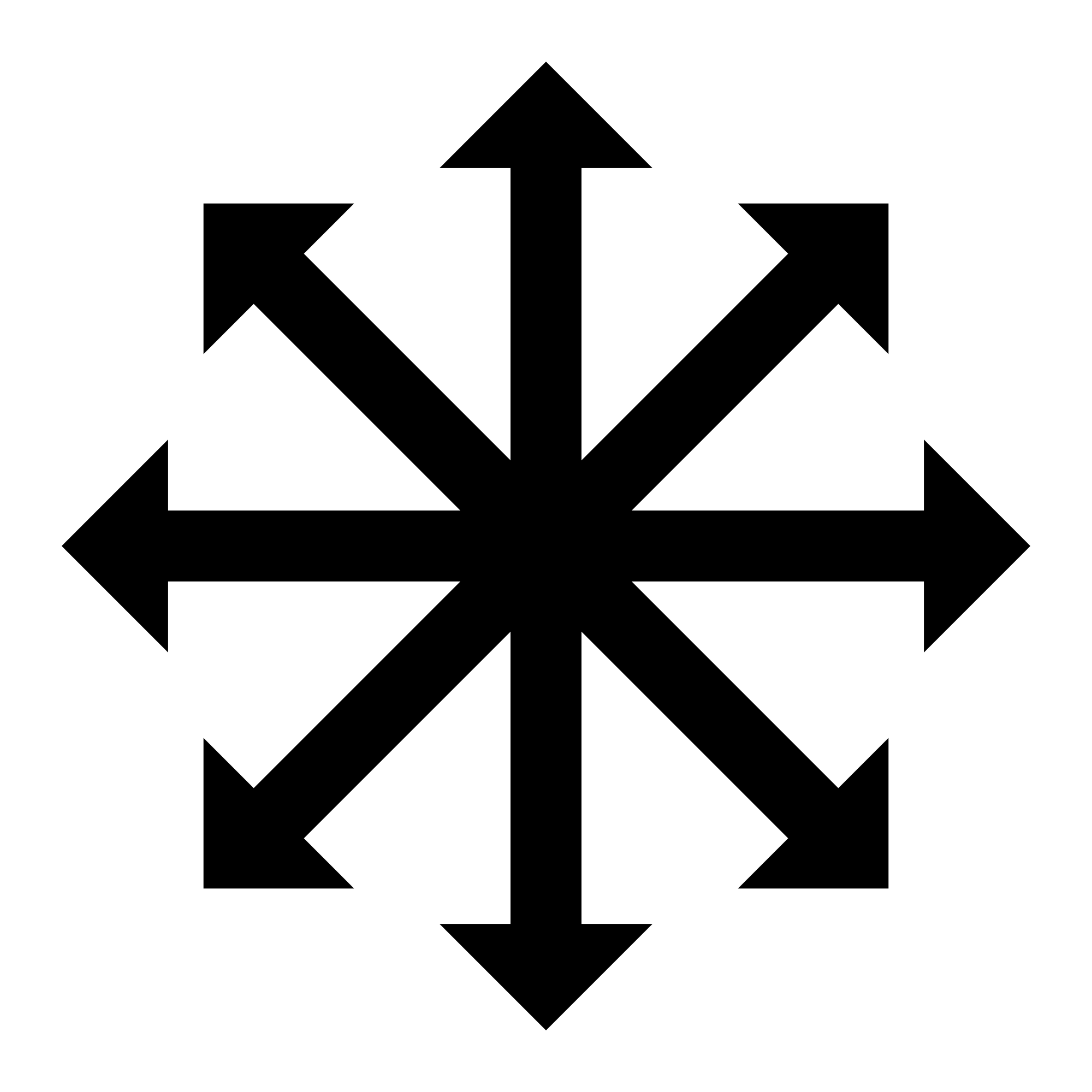


Nine vs. Three vs. Five...
If you're playing with the 1e, 2e, 3e, Pathfinder, and 5e "nine alignments" system, you really have eight flawed character types and one with total freedom to act as the player would.  Other editions of D&D had different systems of alignment that made this easier to understand:

  • Original and Basic D&D:  Lawful, Neutral, Chaotic
  • 4th edition D&D:  Lawful Good, Good, Unaligned, Evil, and Chaotic Evil.


When placed on a simple continuum like those editions, it's easier to see Neutral (or Unaligned) as the "normal reasonable person" alignment, and the others as deviations from it.

But the most popular D&D editions are Pathfinder and 5th edition, so let's look at the Lawful/Chaotic and Good/Evil axes independently.  And let's look at them as "flaws" in the classic RPG sense -- opportunities for the player to have their character act in a surprising way.

With RPG flaws, the player is not at fault when the character makes a bad decision in line with their flaw.

Bill:  "Joe, I can't believe you hid from the Reeve.  He just wanted you to pay a tax you could easily afford.  What if he'd caught you?  We'd all be in trouble over a few gold pieces!"
Joe:  "If it were me, I would have paid the tax.  Jordak, on the other hand, gives nothing to the sneering autocrats who think they can take whatever they want by right of birth."  

Flaws are an RPG mechanic that helps players make those decisions that they know are inexpedient without carrying the blame themselves -- it's not Joe's fault.  Joe doesn't have a chip on his shoulder about authority.  Jordak the Thief does.

So here are the kinds of inexpedient decisions you might make when roleplaying your alignment.

Lawful  
You demand your enemies surrender before attacking, removing the element of surprise and maybe giving them a moment to collect their wits and prepare for battle.  You let fleeing enemies escape unless there has been a warrant issued for their capture or their death.  You won't disgrace yourself by pretending to be someone else.  You will find a way to do what you said, even if you were forced or tricked into it.  You refuse to promise anything except to trustworthy people, because you know you will be bound to your word.  You demand apologies or satisfaction by violence from those who insult you.

Non-Traditional Honor Codes
D&D and Pathfinder assume a world similar to our own, with similar ideas about honesty, integrity, fairness, courage, and temperance.  Even honor codes in vastly different real-world cultures have similar ideas about those things.  But this is fantasy!  It's OK to play a character from a culture with a dramatically different code of honor, but it should be just as restrictive as the default Earth-like code of honor.

Example of a Dramatically Different Honor Code
Traditionally, a Lawful character would demand justice before attacking a humanoid.  "Repent your ways and surrender, or I will slay you where you stand!"  But maybe your character's culture is comfortable with attacking people without warning, if they deserve it.  If you commit a serious offense in that culture, you can expect to be ambushed and killed at any time.  Think about what effects that would have on a culture.  That culture would have strict rules about when it is OK to draw a weapon and what it means to bare steel.  If you take out a weapon in the presence of others, you might be attacking them - there is no cultural penalty to doing so, after all.  People carrying spears or other weapons that could not be sheathed would be immediately suspected of homicidal intent -- more so than just "he's carrying a deadly weapon" but "her choice of weapon signals that she intends to kill without warning."  Wizards would keep their hands visible at all times.   A culture that did not demand justice before administering punishment might also have no concept of repentance.  In a way, it would be more strict than a culture that did.  No repentance.  No forgiveness.  No surrender.  Retreat is only delaying the inevitable.  Such a culture would demand that its warriors fight to the death, even against overwhelming odds.  They might still retreat -- everyone gets scared -- but they would never surrender.  Such a culture would be very careful to never give even the slightest offense.  Politesse and manners would be much more important to them than they are on Earth.  Another thing about this culture -- accidentally hurting an innocent person or administering punishment harsher than was deserved would be strongly censured, or else it would quickly get out of hand.  This supports the culture's obsession with politesse.  If someone hurt you, it is safer to act like the offense is less than it was than it is to over-react.  That's not forgiveness so much as forbearance, dignity and patience.  Truly revered people in this culture would appear to ignore all offenses -- even attacks on their life.

Lawful isn't just Orderly
Discipline and temperance are part of the traditional honor code, but not all of it.  A lawful character is more than just organized and logical.  They have a code, expressed as laws or principles, that they follow.  Typically it reflects the traditional codes of honor we have on Earth, but see above for variations.

Lawful isn't just Obedient
Pro-social deference and humility are part of the traditional honor code, but not all of it, either.  A lawful character isn't just a person who obeys the law and custom.  They internalize the ethical virtues that underpin law itself - the honor code.

Chaotic
You won't give a copper piece to authority figures unless you get something for it.  When you meet The High Queen Jorella Moonflower, Her Highness, Defender of the Realms of Elvenkind, you might lean against a column and call her, "Jorella" like you would with a casual acquaintance, instead of taking a knee and calling her "Your Highness."  You show no respect to toadies or people who slavishly adhere to honor codes.  You don't want a trustworthy reputation - better to be unpredictable and unknown.  You never promise anything because you don't want to be held accountable; and if you are forced to make a promise, you make a point of breaking it somehow.  You sabotage and undermine authority figures, even if they're on your side.  You see no point in chastity or temperence - your character might get blind drunk just for the fun of it.  You're not hurting anyone.  And if you are, is it any worse than the teetotaler refusing to go carousing to gather information because of some abstract ideas about dignity and principle?

Unreliable slob or mysterious rebel?
Chaotic characters might appear to have a chip on their shoulder because they constantly undermine even legitimate, good-intentioned authority.  They see feudalism as an inherently unfair and broken system.  They might appear as lazy, over-indulgent, distasteful slobs because they see no reason to be industrious, abstemious, and dignified; they would rather do what they want without people judging them.  They might appear conceited and unreliable because they don't need to maintain a reputation of humility and trustworthiness; instead preferring to be proud or mysterious.  Charismatic Chaotic characters come across more positively:  A charismatic Chaotic character might be respected for going their own way.  Their confidence and charm make them seem more mysterious than untrustworthy; more revolutionary than undermining; more independent and spontaneous than lazy and unreliable.

(This goes for Lawful characters, too:  An uncharismatic Lawful character might seem like a hide-bound, sanctimonious bore with a death wish; while a charismatic one might come across as trustworthy, honorable, and courageous.)

Chaotic isn't Convenient
Chaotic characters don't obey laws and customs until it's convenient to ignore them.  That's Neutral.  Chaotic characters directly flout or undermine them.  To portray a Chaotic-Good character, it might help if the DM provides examples of how authority, law, and custom have flaws.  They don't have to be huge flaws, but even a few small problems with the social structure will help the C-G character justify their disdain.

Good
You might give your resources away to those in need, even if costs you effectiveness in combat.  You might risk your life for just a 1% chance to save or help an innocent person.  You might use your down time helping others instead of earning money or brewing a potion.  You might let enemies get away because you show them more mercy than they deserve.  When you get no benefit from helping others, only pain and suffering, you don't need excuses.  You know you didn't do it because it made you look good.  You did it because it was good.

Good is Easy to Act and Hard to Choose
It may seem like Good characters have to make more hard decisions than Evil ones.  And that's sort of the point.  Good is all about hard choices.  Evil is easy: Me.  On the other hand, most D&D players are pretty good-hearted folks.  It's hard to play Evil and scoff at an NPC's suffering, abuse your character's henchmen, and manipulate people to do what you want rather than persuade them of the social good of your mission.  So playing Good requires your character to make hard choices.  On the other hand, playing an evil character is going to challenge your acting skills.

Evil
The philosophy of evil is that you only rely on yourself.  Everyone is completely responsible for their own life.  Because everyone is expected to take care of their own life, it doesn't matter if you hurt others - if they couldn't keep themselves safe, they deserved it.  It doesn't matter that you hurt others and gained a reputation as an abuser - you're strong enough to avoid the repercussions.  Evil people can be cowards.  They won't take a risk if they don't think they can avoid the hazards.  They don't trust that others will help them out of kindness or friendship.  They trust that others will help them if they have leverage over them, though.  Evil characters are abusers who get power over others through blackmail, bullying, corruption, lies, and dependence.  Evil characters would never believe they could persuade someone to help them out of a sense of decency.  They would immediately resort to finding leverage to force the person to do as they want.  Evil characters would never expose themselves to a hazard they couldn't survive or force others to endure in their place.  Evil characters would automatically push to gain the greatest reward or greatest share of the reward, only backing down if it would cost them more to persist.  In a party of other adventurers, an evil character would take only their fair share of loot unless they could get leverage over other party members, which is probably not possible if they're all the same level.

Social Contract: Don't Be a Dick
If you're playing an evil character, it is important to talk about your character's penchant for abusing others out of character with the GM and other players.  They might decide to collaborate with you to decide how your character got leverage over their character, so that they could later roleplay how their character turned on your character and punished your character for their manipulation.  Never abuse and manipulate your friends in real life -- make sure they know out of character that your character is doing it. If they want to play along, good.

If the other player is not OK with it, you have to back off and come up with an in-character reason.  Maybe your evil wizard is too afraid of the barbarian to try manipulating him.  Sure, his low Int makes it easy to trick him; but if he ever snapped and turned on you, a single blow from that +2 Keen Falchion would be the end of you.

Over the Top Evil
Some aspects of Evil in D&D are just plain awful.  Cannibalism, soul-stealing, consorting with demons, wanton slaughter, destroying the world, genocide, despoiling things out of hatred for purity, torture for the fun of it -- these activities are horrible and disgusting.  They're "over the top" evil.  An evil PC in an otherwise non-evil party may not get away with these acts.  And they don't have to try -- you can be really evil without doing these things.

Keep it PG-13 (or Whatever)
Alignments are ultimately moral choices, and moral choices can lead to mature themes.  Make sure you understand the "MPAA Rating" of your table and keep from taking things too far.  If your table is playing a PG-13 campaign, then choosing to run an adventure about sexual abuse might be pushing it too far, even if you treat the subject in a mature and educated manner.

Final Thoughts

Mixed Alignments
Lawful and Good seem to go hand-in-hand in a lot of ways.  Honor and honesty seem altruistic and good; and charity and kindness seem honorable and lawful.  The same goes for Chaotic and Evil.  So mixed alignments, like Chaotic Good and Lawful Evil create contradictions.  Some editions didn't have these mixed alignments (Original, BECMI, and 4th edition).  This might be hard to roleplay spontaneously, but the GM can make use of your conflicting alignments to create dramatic choices for you.

A lawful-evil character might find a situation that makes them choose between putting themselves at risk with no expectation of gain, and breaking their word.  One or the other has to give.  You might expect them to break their word and then cover it up; or keep their word and then take revenge for being forced into the situation.

A chaotic-good character might find a situation that makes them choose between helping people and supporting an authority they especially dislike.  The Duke rewards them by bestowing a hospital on them and giving them title Lord Hospitalier.  As long as they don't piss off the Duke, they can do a lot of good for the people of the duchy.  The character would have to grit their teeth and serve a Duke, or else undermine the Duke more subtly.

Neutral as Balance
In some D&D settings, Neutral is more than just "not law/chaos/good/evil" but instead a concept of balance between them.  In Dragonlance, for instance, the world is at risk when it is not balanced.  Neutral alignment in those settings can also mean "my character is aware that the world needs to remain balanced, and I intend to restore that balance."  Ultimately, that character has a strange (alien to us!) philosophical idea that some amount of cruelty and abuse is necessary to the cosmological underpinnings of reality itself, but too much is just as bad.  Same with order and chaos.

True Neutral Still isn't Just "You"
If you play True Neutral, try to invent some important ways in which your character makes decisions differently from you.  In a way, Neutral can be more challenging than the other alignments, as a result.  It helps to pick a driving goal for your True Neutral character, and seek to achieve it no matter the cost.

September 29, 2015

Death Omens

Today's post is the second part of Reinhart's guest post on character death.  See part 1 here.  Also, take a look at his blog, Chaos Engineering.

Last time, I explained the appeal of both random character death and dramatic character death, and how to handle both. Before you read this, you owe it to yourself to read that if you haven’t already. I mentioned then that this isn’t a zero-sum game. In fact, you can actually have both random character death and dramatic character death in the same game if your players are willing to make some interesting compromises.


For that purpose, I’m going to give you a system-agnostic mechanic that I use in many of my own roleplaying games: Death Omens. Death Omens help you mitigate the senselessness of random character death while still giving the dice the power to decide some of the when and how of a character’s death. Plus, they’re also really easy to port into most systems.


All you really need are some index cards and a writing utensil. (What good GM doesn’t have have those?) The idea is to directly telegraph when you’re introducing deadly stakes. You see this sort of game mechanic lately in video games like Destiny.


Adapting a mechanic from a video game doesn’t make your RPG into a video game any more than adapting a character from Game of Thrones makes your RPG into an HBO T&A drama.

A Death Omen is a game-world event that signals to the players that their characters might die here.  It’s a note on an index card labeled DEATH OMEN that describes why the scene is potentially deadly.  It makes it clear in black-and-white that death is on the line.


Now and then the dice might create a situation that would permanently remove a player character from the game. When that happens, if no Death Omen is in play for that player, then the consequences are assigned instead to the stakes for that scene.


You’re presenting clear stakes for your conflict scenes, right?  


Stakes and Deadly Stakes


Every time there’s a conflict, both parties want something, and the two goals are in opposition to some degree.  
  • The ghouls want to eat, and the PCs want to explore the tomb.  Being eaten would certainly stop them from exploring the tomb!  
  • The forest fire wants to burn everything, and the PCs want to escape the forest alive.  Being burned alive would certainly stop them from escaping!
  • The orcs want to protect their camp, and the PCs want to sneak in to rescue some captives.  If the PCs get in, the orcs have failed to protect the camp.
  • The Duke wants to preserve his power, and the PCs want him to arrest the nobleman who killed their mentor.  If the Duke arrests the nobleman at the request of some common adventurers, he undermines his power base.


“Stakes” is a common term in all kinds of games.  In essence, it means “the thing that happens if you screw up.”  In a dramatic conflict between PCs and the opposition in a tabletop RPG, stakes always means something that happens when the PCs fail to achieve their goal, or fail to prevent the opposition from achieving theirs.


Sometimes the stakes are deadly:  The ghouls’ hunger and the forest fire are imminent threats to life.  But the orcs might not want to kill intruders so much as keep them away.  They might be content with a blustery show of force, or a cruel and savage beating that drives intruders off.  Sure, orcs are big strong monsters with huge swords.  They’re deadly; but then so are Dukes.  If the PCs screw up with the Duke, he could just have them hanged for trumped up charges.  The scene’s stakes are only “life or death” when the opposition wants to kill the PCs, first and foremost -- if killing the PCs is the opposition’s goal.


Of the two deadly stakes examples, one is necessarily deadly, and the other is possibly deadly.  In both, the opposition wants to kill the PCs; but in the ghoul scene, there are more ways for the PCs to fail than just getting killed.

Ghouls

  • PC Goal: Get into the tomb
  • Opposition Goal: Eat living flesh


Forest Fire

  • PC Goal: Not get burned to ashes
  • Opposition Goal: Burn everything to ashes

In the ghoul scene, there are three possible “failure” conditions:

  1. Opposition goal succeeds:  The ghouls eat the one or more of the PCs
  2. Opposition goal succeeds:  The ghouls eat some innocent villager or some innocent villager’s cattle
  3. PC goal fails:  The PCs are driven off by the ghouls and cannot get into the tomb


In the forest fire scene, there is only one possible failure condition:

  1. Opposition goal succeeds; PC goal fails:  One or more PCs are burned to ashes


Death Omens that Communicate Stakes


When we talk about Death Omens, we’re talking about something that signals to the PCs that the stakes of the scene have become necessarily deadly.


The forest fire scene will start with a Death Omen.  It will say “You could be burned to death in this fire.”


While that card is in play, PC death can happen any time.  It’s a sword of Damocles.


So... were you, like, born with that?


The ghoul scene might not start with a Death Omen.  But once the PCs get closer to the ghouls than any other edible flesh, the GM will probably hand out a card that says “These ghouls want to kill you and eat your flesh.”  If the PCs try luring them into a pit trap with some cattle, or sacrificing an annoying villager to them, the Death Omen might not come out.


Are Death Omens “plot armor”?  No.  They’re a descriptive tool, not a proscriptive tool.  A scene where the GM didn’t want to use character death as stakes anyway doesn’t get a Death Omen.  There’s a social contract that says “nobody’s PC dies unless there’s a Death Omen on the table.”  But as soon as the GM sees death in the offing, out comes an Omen.


This is the most basic application of Death Omens.  They communicate what the stakes of the scene are in the most basic sense.  In theory, you could use an index card to describe the stakes of every scene, but character death as stakes is unique.  In most tabletop RPGs, a player’s ability to play the game at all ceases if his or her character dies.  That’s a big deal.  That’s worth a special omen.


But there is another way to use Death Omens.  It helps make the game more cinematic, and gives the players more control over their characters’ story arcs.


Shape of Your Doom:  Author Stance Death Omens


If you’re a very narrative group, you might want to use Death Omens in an entirely different way.  This is a distinct variation of the above system.  


During Session Zero (or Character Creation for those who don’t know that term), the GM announces the campaign is going to use Death Omens, and the player gets to choose the conditions in which their character may die.  It lets a player choose something thematic about their character, a type of situation that will always spotlight their character, and how rare life-threatening scenes will be.


They have to pick something as their Death Omen, and whatever that thing is, they can’t be killed unless the scene involves that Omen.  They can even choose something rare or seemingly harmless.  


SEEMINGLY harmless.


Each player writes their character name on a card along with their Death Omen and hands it to the GM.  Whatever it is, the GM will serve up life threatening scenes for the party with this characteristic.  When those scenes happen, the GM will place the appropriate Death Omen card(s) on the table.


For example, if you choose “Fire” as your Death Omen, then you can’t die except in scenes where the GM takes out your “Fire” Death Omen card and puts it on the table.  And the GM will not do that unless fire plays a major role in that scene.  You might be crossing a bridge over lava, fighting a red dragon, fleeing a forest fire, battling a mutant pyrokineticist, or running into a burning building to save a loved one.  


Make sure to foreshadow your Death Omen by having your character talk about his or her fears/enemies/weakness all the time.  Make it a shtick.

If your card isn’t out, you’re not in danger of dying.  But you can still suffer major losses.  Here’s where the challenge comes in.  The GM will need to think of alternative stakes for every scene, other than death.  If just one PC has Fire as a Death Omen, a burning building can’t kill most of the PCs.  But they can be injured, disfigured, poisoned with toxic gasses, knocked unconscious, rescued by and indebted to questionable people, have valuable equipment destroyed, etc.


That should be plenty of food for thought. I appreciate feedback, so please give Death Omens a shot in your games, and tell me how they worked for you.

August 10, 2015

Party Conflict in RPGs

Five Flavors of Intra-Party Conflict
Intra-party conflict in RPGs commonly comes in five different “flavors.”
  1. Organic Disagreement
  2. Explicit Competition
  3. Traitor as PC-NPC
  4. Clashing Ideals
  5. Director Stance

For each, I’m going to describe the conflict, how it’s used, and what dangers are inherent in it.  I will then offer a tip for GMs who find themselves refereeing that conflict.  It’s tricky, handling party treason.
benedict arnold.jpg
Benedict Arnold: Iconic American traitor

My philosophical stance that underlies these tips is that we play RPGs to have fun, and that the GM’s job is to facilitate a fun, exciting game.  You don’t facilitate a player vs. player conflict; you referee it or prevent it so that you can facilitate a fun dramatic moment between characters - not an un-fun conflict between players.  I recognize that other GMs have different ideas about this, but I respectfully disagree with them.


Organic Disagreement

Key concepts review:  

The most common conflict occurs when the players, immersed in actor stance, have an in-character disagreement.  The disagreement rises to a serious conflict that could be overcome by stepping back from the game world frame into the social or game frame and discussing OOC reasons why the inciting player chose the actions they did for their character.  But for any number of reasons, the players don’t do that.  A common reason is that it’s fun to have a row in character -- though different players tolerate this to different degrees, so be careful!  Other possible reasons include authorial independence:  Where a player prioritizes control over their character’s actions over party harmony, e.g. “This is how my character would act, and I don’t want your OOC concerns affecting my decisions about my character’s actions.”  

In organic disagreements, conflict is player vs. player and character vs. character at the same time, because the players are fully immersed in the game world frame / actor stance.  When players’ autonomy over their own characters is so strong that they act in character without OOC consideration for one another as players, there is (by definition) no social contract that says that the players will choose character actions that will not hurt the feelings of other players.  

GM Tip:  Priorities, people!  When organic conflict arises, remind the players that they are all friends, and it should be OK to sacrifice a little autonomy over their characters’ actions in order to avoid annoying their friends around the table.  This establishes a norm of respecting each other as players first, and respecting each other’s autonomy over their character second.  


Explicit Competition

Key concepts review:

Some RPGs are pitched as explicitly competitive adventures or campaigns, where the PCs are forced to work together, but have their own, competing agendas.  This is a common style for games like Vampire and Ars Magica, and for Elysium Style LARP (which arose from Vampire).  At the start of the game, the GM ensures that all the players accept the competitive premise and design characters who will be fun to play in that sort of scenario.  Players can choose to play characters out to win, out to fail horribly, out to be sympathetic underdogs caught in the fray, or doomed heroes who put themselves above the fray, and are torn apart as a result.  These games are rarely at the Hero rung or higher for mood.

In explicit competition, the conflict is player vs. player, where the competitive skill of the players determines the final outcome.  Will Andy’s character become Prince?  Or will Betty’s?  Because of the explicit nature of the game, the conflict is an accepted part of the game frame understanding of events, and does not affect the social frame relationship between the players.  

GM Tip:  Just because the players accept a competitive premise doesn’t mean they’ll take losing well.  Anyone can be a sore loser, and sometimes they’re justified (such as when a player exploits a rules loophole to win the conflict).  GMs should make sure to be a fair referees in explicitly competitive games; and when players win unfairly, GMs should shift the blame to themselves and act to restore fairness somehow.  (It’s a hard balancing act!  Just look at all the drama in Vampire LARP communities!)


Traitor PC-NPC

Sub-types of this flavor of betrayal are the key concepts to review:
  • Face-Heel Turn, where the traitor is initially loyal, then changes sides
    • Subtrope: Forced Into Evil, which happens when a character is taken over by the GM due to madness, mind control, possession, etc. (see Director Stance, below)
    • Subtrope: Face-Monster Turn, which is where the character is turned permanently into a monster, such as by a vampire bite, werewolf curse, etc.
  • The Mole, where the traitor was a traitor all along

Perhaps the most common (and easiest) way to handle party betrayal in a Hero-rung game or higher is to allow a party traitor, but treat it like that player is playing an NPC.  The PC-NPC acts like a typical PC while adventuring with the party, until their treason is revealed.  At that point, there is a final confrontation, and the traitor is killed or escapes to become an NPC.  Regardless, once the traitor’s actions are no longer secret, the traitor’s player has to make a new character.  This is a good way to handle party traitors in D&D and similar heroic-mood RPG scenarios.

Because the traitor player is acting with the permission of the GM in the role of a party antagonist, the treason is acceptable.  The conflict is character vs. character.  The GM uses their power to maintain the traitor’s secrecy until the climactic betrayal, at which point the GM uses their power to turn the traitor PC into an NPC.  The traitor’s player is seen as helping the GM make the game more fun, rather than betraying the other players.  This makes it acceptable within the game frame, in the same way that the GM using an NPC to betray the other player characters is acceptable.

GM Tip:  This is probably the most tame kind of intra-party conflict.  But some players are sensitive to any disharmony in the group, or just don’t like surprises.  In the pitch, make sure the players know that there might be a party traitor.  Then they’ll be eagerly anticipating the climactic betrayal, instead of surprised and unhappy about it.  Also, make sure to let the betrayed characters can get their revenge against the traitor.  Otherwise, there could be some bleed-out resentment.

Clashing Ideals

Key concept review:

In just about any kind of game up to (but not including) the superhero rung, the GM can engineer a situation where any solution the PCs seek inevitably harms another PC’s agenda.  In that case, the players must choose how they’ll handle it.  Their choices vary between extreme harmony and extreme disharmony:
  • With extreme harmony, the PCs negotiate and come to a consensus on their solution.  “OK, we’ll go with Andy’s tactic, but that will hurt Betty’s agenda.  So next chance we get, we’ll go make it right, fix the damage we did, and try to advance her agenda.”  In this case, they accept a difficult negotiation, followed by a fairly harmonious reconciliation.
  • With extreme disharmony, one or a group of PCs seize the initiative and act on their own, choosing an option that hurts another character’s agenda.  Then they have a long, hard road to reconciliation afterwards.  “It’s easier to ask forgiveness than permission,” is not always true!

This sort of conflict is designed to create dramatic character vs. character conflict within the party temporarily.  The players, acting in character, have to negotiate both the resolution of the challenge (who gets the shaft?) and the reconciliation of the conflict (how can the shafted PC forgive the others?).  The players usually have OOC motives here (that’s what hooks are, after all - expressions of OOC motives), and might suffer some bleed-out into player vs. player conflict if they cannot come to a solution that satisfies all the players.  Ironically, there might be bleed-in later as a player might be offended by being shafted, and become more unforgiving than their character would be.

GM Tip:  If the players cannot come to an agreement in character, ask them to talk about it out of character.  If they cannot come to an agreement out of character, you have to modify the situation so that they can.  It’s always better to retcon something than to have the players hate each other (and you) for putting them in a spot they’re uncomfortable with OOC, as humans with friendships and feelings.


Director Stance

Key concept review:
  • Flaws as author stance empowerment

Many RPGs encourage director stance character vs. character (instead of player vs. player) conflict.  Fiasco is entirely based on it.  Fate has a Compel mechanic that allows players and GMs to make each other act irresponsibly and possibly against party interests.  Indie RPG Unsung has this mechanic as well. Many RPGs have forced-behavior mechanics such as Flaws (Champions, World of Darkness) or stress mechanics (Call of Cthulhu, Werewolf: the Apocalypse) that cause characters to act irrationally.  When the system forces a character to act against the party interest, the player is not at fault, making it an author or director stance decision.  

The conflict here is explicitly character vs. character.  The players are fully aware that the player whose character commits treason against the party is acting based on author or director stance, game frame, impulses.  Events proceed from the understanding that the character acted irresponsibly or selfishly, not the player, and the conflict never bleeds out of the game world frame.

GM Tip:  Most games with mechanics that compel other players’ behavior usually have a pressure-release valve in the form of a veto of some kind.  Even where there is no veto, if a player is uncomfortable being forced into a decision for their character that they are unhappy with, use your GM fiat to undo the mechanical compulsion, fudge a roll, or ignore the rule.  It’s better to cheat a little than to ruin someone’s fun.